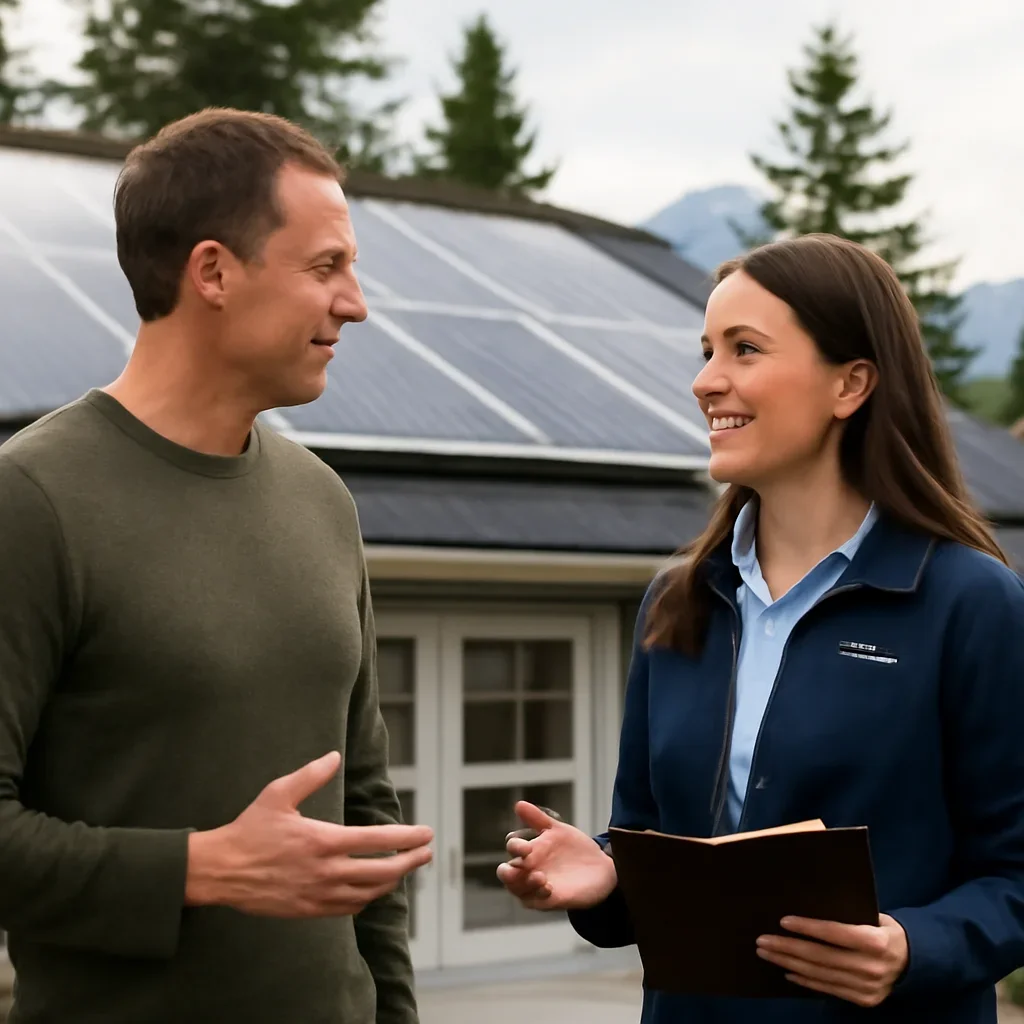
Local context
Quesnel projects are shaped by real property conditions, not by province-wide assumptions dropped onto every roof.

Service Areas
Quesnel property owners often want clear answers before moving ahead with solar: whether the roof is suitable, how the system should be sized, what the process looks like, and how utility coordination is handled.
Local projects often depend on site exposure, roof condition, electrical capacity, and the practical steps needed for permitting and utility approval.
Discuss your project
Quesnel projects are shaped by real property conditions, not by province-wide assumptions dropped onto every roof.
Permitting, utility steps, and installation planning are easier to manage when the scope is clear from the start.
Homes, commercial sites, and acreage properties often need different layouts, equipment choices, and project pacing.
A useful review in Quesnel looks at roof orientation, available surface area, inverter placement, service capacity, and the practical steps required before installation work begins. Residential and commercial projects often need different design conversations, even when the end goal is similar.
Future changes such as an EV charger, workshop load, or backup requirement can affect the design today, which is why they belong in the first planning discussion.
Many local enquiries also connect to pricing, residential solar panels, solar battery storage, and permits and inspections in BC.


The local process is easier when the early discussion defines the likely system type, the main site constraints, and the goal behind the project. That prevents the next steps from drifting into guesswork.
With the site information in place, the next stage is usually a clearer scope, a more relevant equipment discussion, and the approval workflow tied to the project.
After an enquiry, the conversation usually moves into property review, scope clarification, and a better sense of whether the project is ready for design direction or a fuller quote discussion.
Keeping the discussion tied to the actual site makes later decisions easier and cuts down on guesswork.
The process normally begins with the site basics: building type, power usage, available installation area, and any known electrical limits. Once that is clear, the review can move toward system fit, likely scope, and the approvals that apply to the property.
Yes. Those steps are part of the project workflow, and they are handled alongside design and installation planning. The exact sequence can change depending on the property and utility requirements, but you should know what is being submitted and what stage the project is in.
A recent power bill, photos of the roof or site, and any information about electrical upgrades can help speed things up. Even without all of that, an initial conversation can still narrow down likely system options and the questions that need to be answered next.
Next step
Share the basics of your Quesnel property and the goal behind the project, and we will help you understand the most practical next move.
Send project details