Local context
Merritt projects are shaped by real property conditions, not by province-wide assumptions dropped onto every roof.

Service Areas
Merritt property owners often want clear answers before moving ahead with solar: whether the roof is suitable, how the system should be sized, what the process looks like, and how utility coordination is handled.
Planning here usually focuses on strong summer production, seasonal snow considerations, and properties with more room for larger system layouts.
Discuss your project
Merritt projects are shaped by real property conditions, not by province-wide assumptions dropped onto every roof.
Permitting, utility steps, and installation planning are easier to manage when the scope is clear from the start.
Homes, commercial sites, and acreage properties often need different layouts, equipment choices, and project pacing.
A useful review in Merritt looks at roof orientation, available surface area, inverter placement, service capacity, and the practical steps required before installation work begins. Residential and commercial projects often need different design conversations, even when the end goal is similar.
If battery storage, EV charging, or future expansion is part of the plan, it helps to account for that early so the system is not designed too narrowly.
Many local enquiries also connect to pricing, residential solar panels, solar battery storage, and permits and inspections in BC.

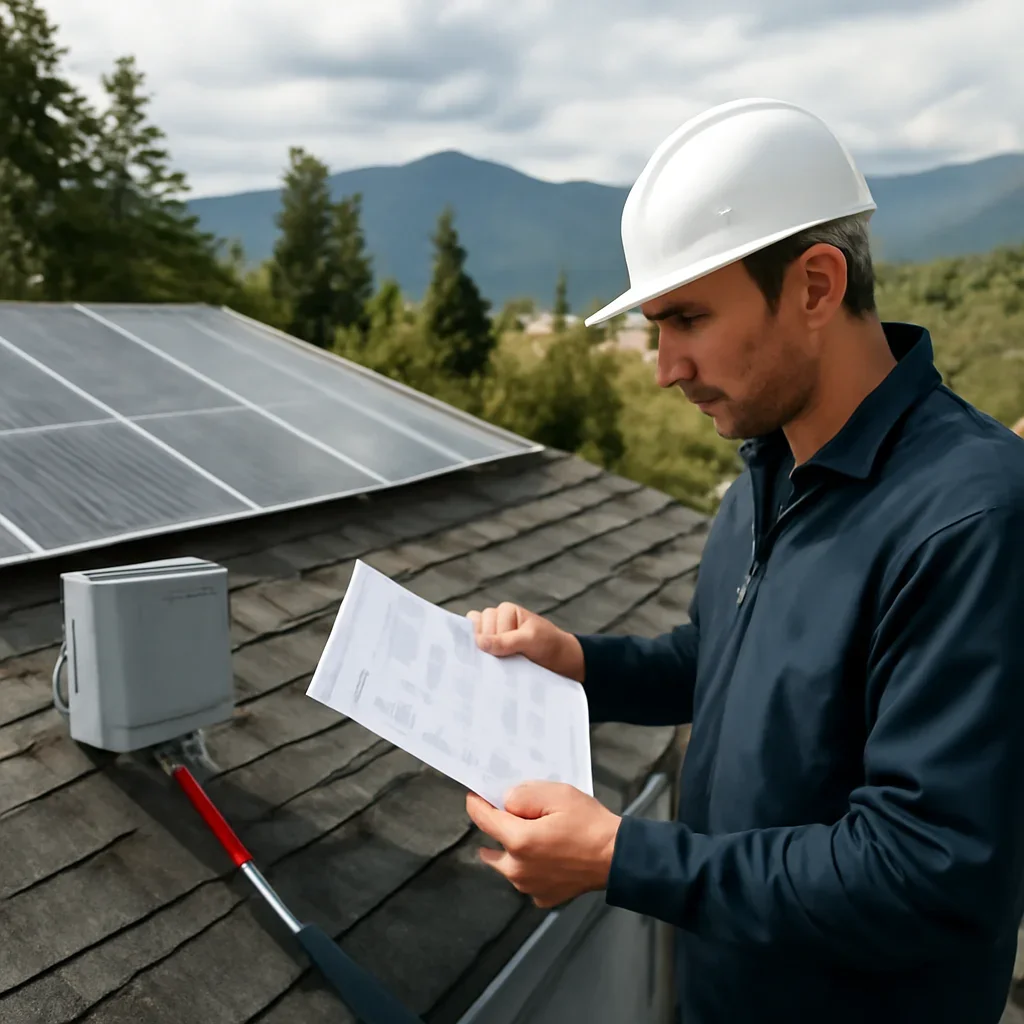
The first conversation should narrow down whether Merritt is a good fit for rooftop solar, ground-mounted solar, or a staged approach that starts with the highest-value part of the property. That keeps the next step focused and reduces avoidable back-and-forth.
With the site information in place, the next stage is usually a clearer scope, a more relevant equipment discussion, and the approval workflow tied to the project.
The process after first contact is normally a scope check that identifies the property conditions, likely constraints, and the information needed before pricing or design becomes more specific.
The point is to move from general interest to clear project direction without skipping the details that affect performance, cost, and installation flow.
Most projects begin with a quick fact-finding step covering the address, roof or land conditions, electricity profile, and project goals. That first review helps turn a broad enquiry into a clearer design direction and a more realistic quote conversation.
Yes. Approval steps are usually managed as part of the wider project rather than as a separate task for the property owner to decode alone. What matters most is keeping the submission sequence tied to the actual scope of work.
It helps to share the property location, the building type, recent utility information, and whether storage, EV charging, or expansion is part of the plan. Those details make the first recommendation much more useful.
Next step
Share the basics of your Merritt property and the goal behind the project, and we will help you understand the most practical next move.
Send project details