Practical local detail
Grand Forks properties can vary widely, so local solar planning works better when the site drives the recommendation.

Service Areas
Grand Forks property owners often want clear answers before moving ahead with solar: whether the roof is suitable, how the system should be sized, what the process looks like, and how utility coordination is handled.
Local projects often depend on site exposure, roof condition, electrical capacity, and the practical steps needed for permitting and utility approval.
Discuss your project
Grand Forks properties can vary widely, so local solar planning works better when the site drives the recommendation.
Clarifying approvals, roof readiness, and electrical constraints early makes later stages easier to manage.
Some properties need a simple rooftop system, while others benefit from storage, phased upgrades, or ground-mounted design.
A useful review in Grand Forks looks at roof orientation, available surface area, inverter placement, service capacity, and the practical steps required before installation work begins. Residential and commercial projects often need different design conversations, even when the end goal is similar.
If battery storage, EV charging, or future expansion is part of the plan, it helps to account for that early so the system is not designed too narrowly.
Common next pages from here include installation, how many panels you may need, and the enquiry page.

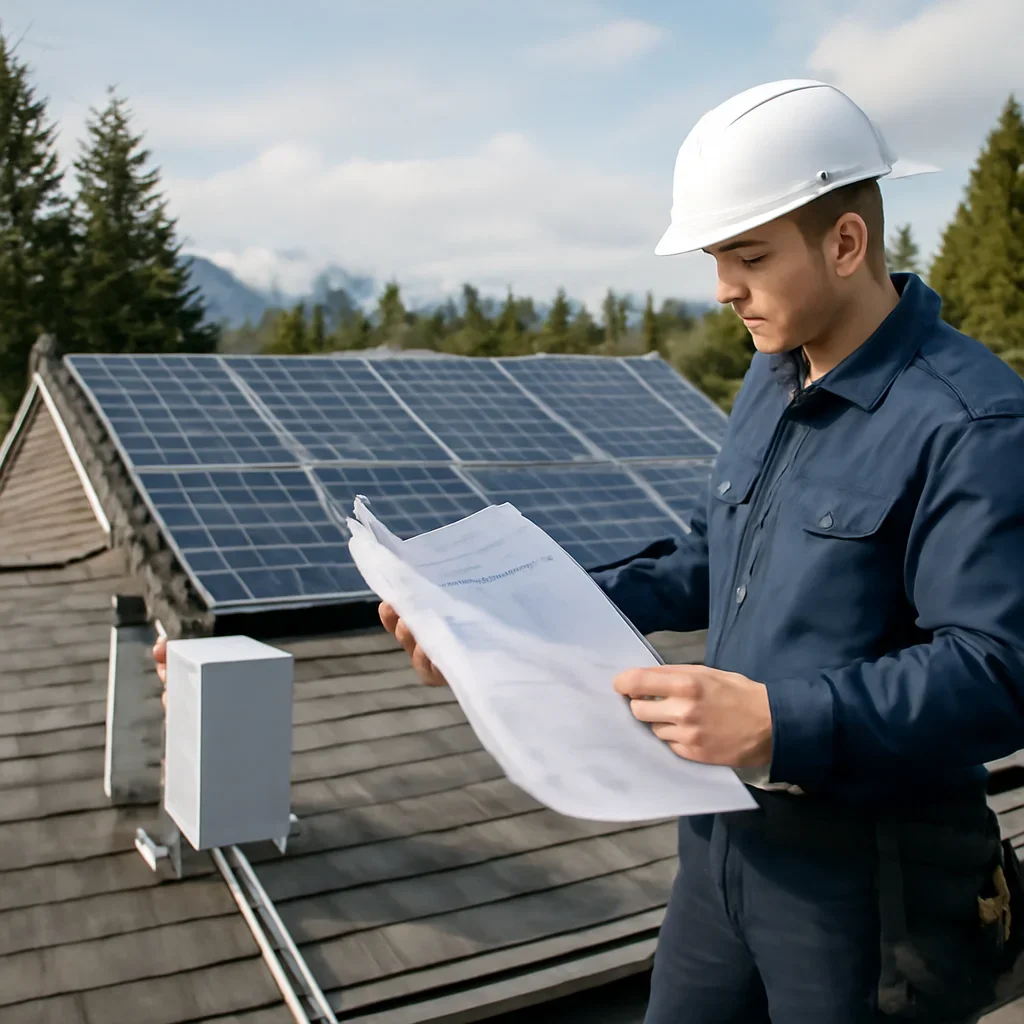
The first conversation should narrow down whether Grand Forks is a good fit for rooftop solar, ground-mounted solar, or a staged approach that starts with the highest-value part of the property. That keeps the next step focused and reduces avoidable back-and-forth.
Once the property details are clear, the project can move into scope review, design direction, and the approval steps that apply to the installation.
The process after first contact is normally a scope check that identifies the property conditions, likely constraints, and the information needed before pricing or design becomes more specific.
Keeping the discussion tied to the actual site makes later decisions easier and cuts down on guesswork.
The process normally begins with the site basics: building type, power usage, available installation area, and any known electrical limits. Once that is clear, the review can move toward system fit, likely scope, and the approvals that apply to the property.
Yes. Approval steps are usually managed as part of the wider project rather than as a separate task for the property owner to decode alone. What matters most is keeping the submission sequence tied to the actual scope of work.
It helps to share the property location, the building type, recent utility information, and whether storage, EV charging, or expansion is part of the plan. Those details make the first recommendation much more useful.
Next step
Send a few details about your Grand Forks site, the building type, and the result you want from solar, and we will point you toward the right next step.
Send project details