Area-specific planning
Duncan installations work best when site exposure, roof type, and local project conditions are understood early.

Service Areas
Duncan property owners often want clear answers before moving ahead with solar: whether the roof is suitable, how the system should be sized, what the process looks like, and how utility coordination is handled.
Projects here often balance coastal moisture, salt air exposure near the water, and roof layouts shaped by dense neighbourhood lots.
Discuss your project
Duncan installations work best when site exposure, roof type, and local project conditions are understood early.
A clear sequence for review, design, and approvals keeps the project moving without unnecessary uncertainty.
The right system for a townhouse, detached home, farm, or light industrial site will not look exactly the same.
A useful review in Duncan looks at roof orientation, available surface area, inverter placement, service capacity, and the practical steps required before installation work begins. Residential and commercial projects often need different design conversations, even when the end goal is similar.
If battery storage, EV charging, or future expansion is part of the plan, it helps to account for that early so the system is not designed too narrowly.
You may also want to compare this page with ground-mounted solar, roof-mounted solar, and project pricing factors.

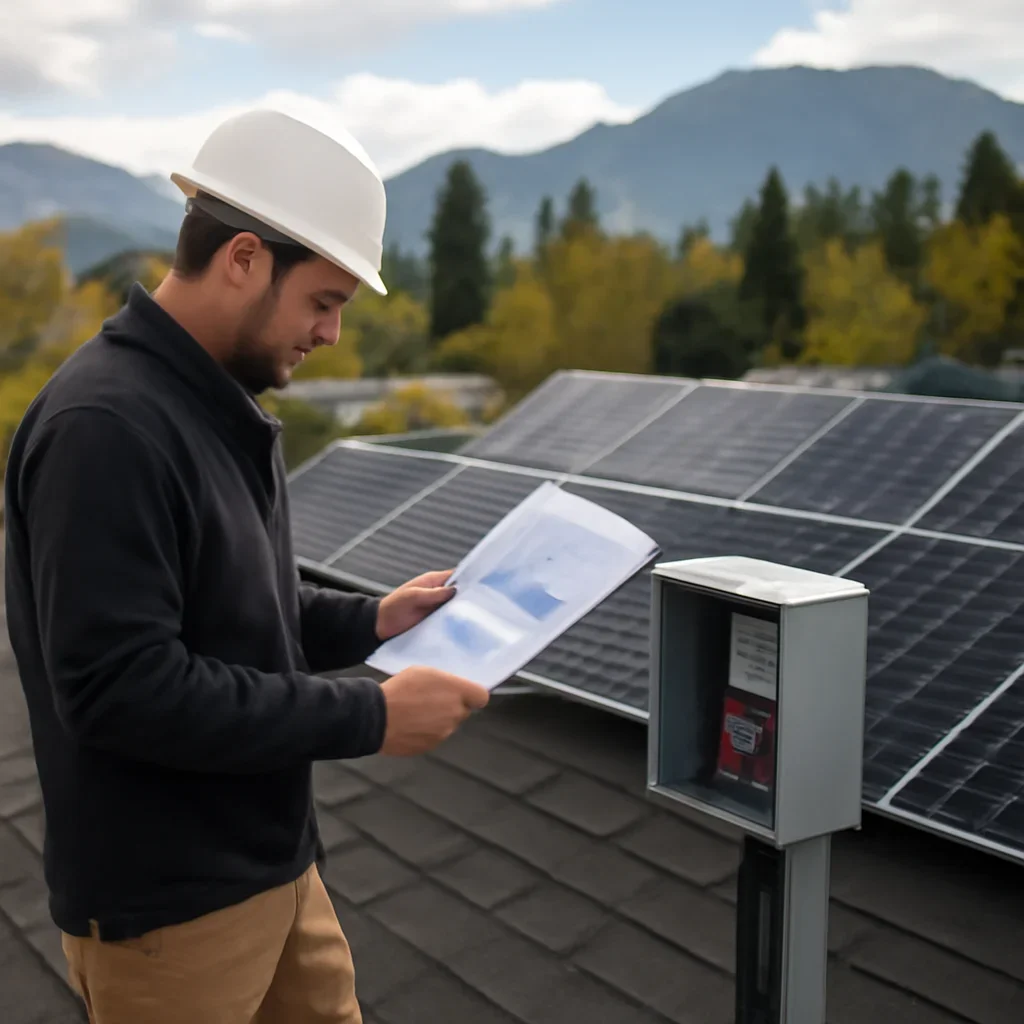
The local process is easier when the early discussion defines the likely system type, the main site constraints, and the goal behind the project. That prevents the next steps from drifting into guesswork.
Once the property details are clear, the project can move into scope review, design direction, and the approval steps that apply to the installation.
After an enquiry, the conversation usually moves into property review, scope clarification, and a better sense of whether the project is ready for design direction or a fuller quote discussion.
Keeping the discussion tied to the actual site makes later decisions easier and cuts down on guesswork.
Most projects begin with a quick fact-finding step covering the address, roof or land conditions, electricity profile, and project goals. That first review helps turn a broad enquiry into a clearer design direction and a more realistic quote conversation.
Yes. Approval steps are usually managed as part of the wider project rather than as a separate task for the property owner to decode alone. What matters most is keeping the submission sequence tied to the actual scope of work.
Useful details include the address, recent electricity usage, roof photos, and any notes about service-panel capacity or future upgrades. If you do not have every item yet, the discussion can still start with the property type and the main reason you are exploring solar.
Next step
Share the basics of your Duncan property and the goal behind the project, and we will help you understand the most practical next move.
Send project details